
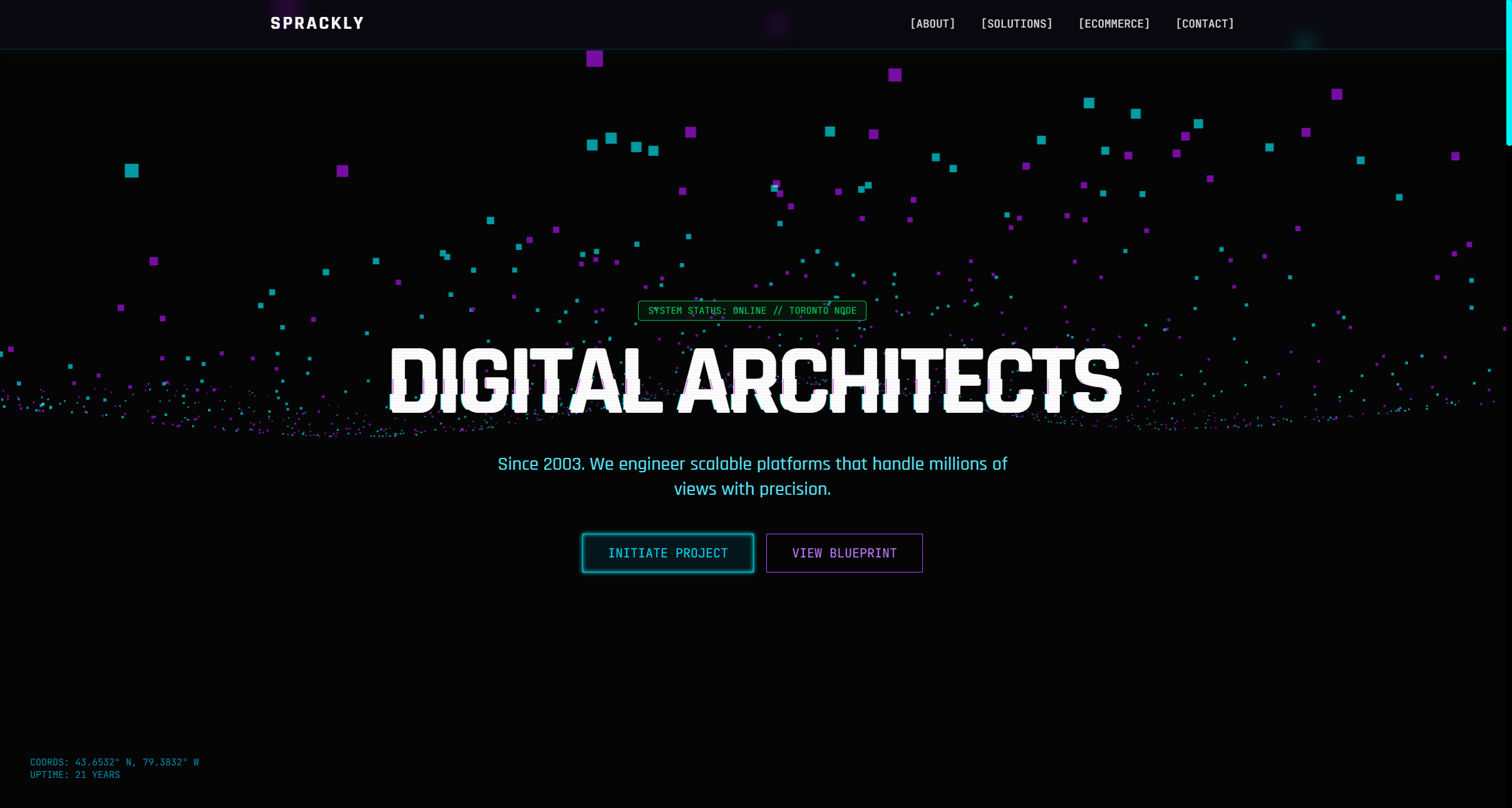
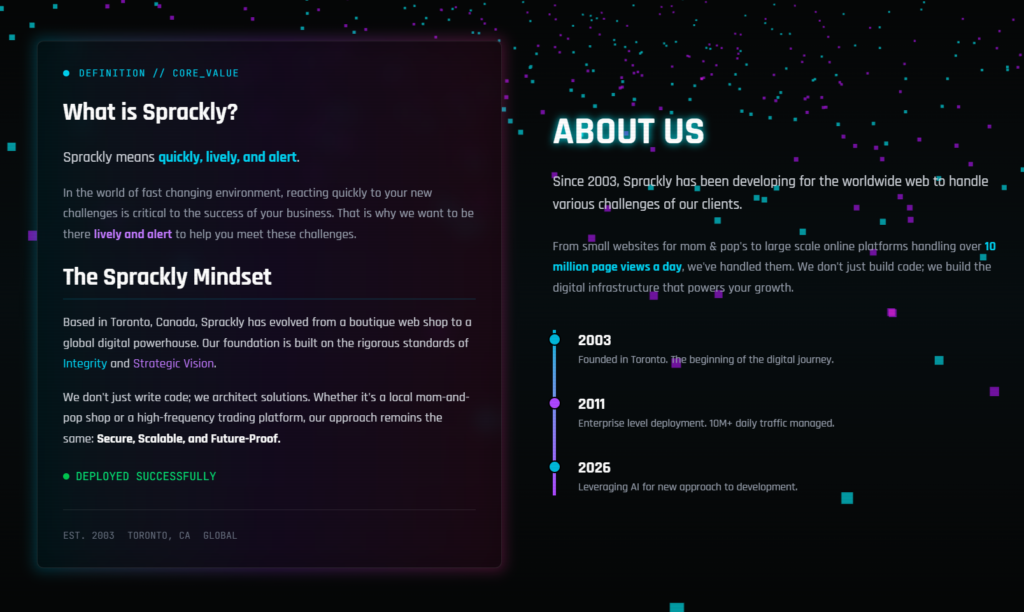
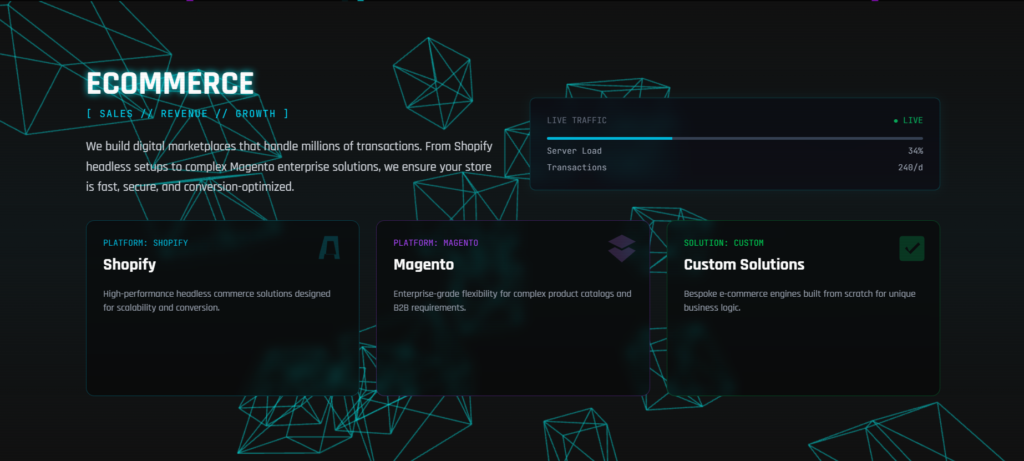
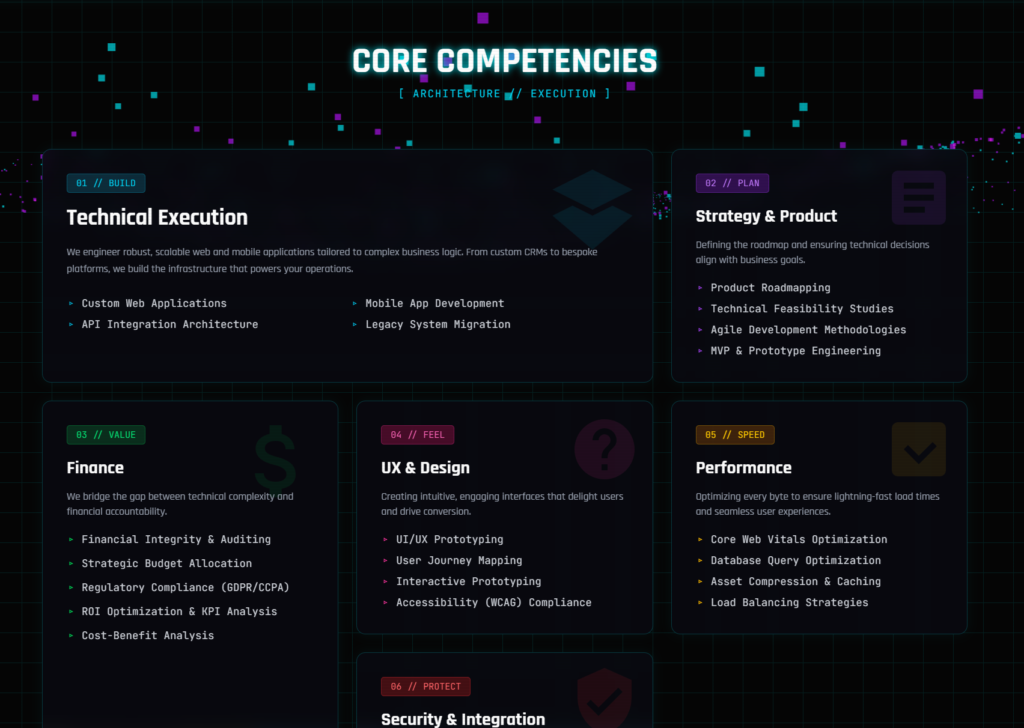
Advances in applied AI continue to reshape what individual developers can accomplish. Using LM Studio with RTX 3090 in combination with the GLM4.7 Flash model, which is only 6 days old as of making this post, I recently redesigned the Sprackly.com website, and the results were genuinely impressive. Unlike earlier attempts at AI-assisted web generation, this iteration produced a design that is both visually coherent and production-ready.
The site leverages three.js to render an animated background and Tailwind CSS to provide a responsive, clean, utility-driven layout structure. The integration between AI-generated concepts and modern frontend tooling made the development process significantly faster.
However, AI is far from a turnkey solution. High-quality output still depends heavily on high-quality prompts, and crafting those prompts requires domain knowledge. The long-standing communication gap between clients and engineers hasn’t disappeared; it has simply shifted into a new form. AI amplifies the capabilities of someone who already understands the problem space, but it cannot compensate for a lack of foundation.
This dynamic creates an interesting tension. Skilled developers who pair their expertise with AI can produce results at remarkable speed. Conversely, newcomers may find themselves overwhelmed, generating low-quality output without understanding how to correct or refine it.
A broader concern is the potential impact on the talent pipeline. Organizations need junior developers to grow into senior engineers, but if AI reduces the perceived need for entry-level hiring, we risk diminishing opportunities for new talent to develop. Without that early-career investment, the industry may inadvertently limit the creation of future experts.
It raises an important question: Are we, as programmers, unintentionally dismantling the very pathways that allowed us to become experts in the first place. Are we burning the bridges we’ve come across?
Leave a Reply